Hydrothermal Systems
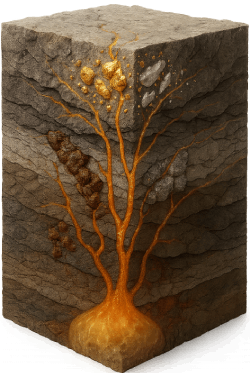
Hydrothermal systems are the predominant processes for the formation of both precious and base metal deposits. The principal feature of these systems is the hot, mineral-rich fluids that move through the crust of the earth. The accompanying cooling of the fluids during the ascension promotes deposition of metals together with the movement of the metals through fractures, faults, and porous rocks.
There are multiple sources of hydrothermal fluids. One of them is the deep magmatic intrusions, where heat causes the water to dissolve the metals from the surrounding rocks. Another source is the hot volcanic systems that heat the groundwater making it more reactive. These fluids, however, no matter from where they originate, are natural chemical transporters and gold, silver, and copper are the main metals carried by them in the form of solution.
The cooling or pressure/chemistry change of the hydrothermal fluids leads to the formation of metals (precipitate). This process of deposition results in the creation of veins, stockworks, breccias or disseminated zones which can later on become ore deposits. The majority of the largest gold and silver mining areas of the world are associated with hydrothermal activity.
The Importance of Temperature and Pressure
Temperature and pressure control how metals behave in solution. At high temperatures, fluids can carry significant amounts of gold and copper. As they rise and cool, their ability to hold metals decreases. This loss of solubility forces metals to crystallize and bind to minerals such as quartz or sulphides.
This process explains why vein systems often show zonation. Deeper zones may contain copper and high temperature minerals, while shallower zones may host gold, silver and quartz rich veins. Understanding these gradients helps geologists predict where richer mineralization might occur.
Intrusive Bodies
Plutons, or intrusive rocks, are the main contributors to metal deposits. They are the underground magma masses that have partially melted and slowly cooled to form solid rock. Crystallization releases vapors containing metals and sulphur. These vapors migrate upwards through the crust and accumulate in fissures and cracks as deposits of metals.
Porphyry deposits are the classic example of this. The porphyry deposit is a large low-grade but high-tonnage type of ore formed through hundreds of years of cooling and crystallization next to the intrusive body, which can sometimes contain enormous amounts of copper (in addition to large amounts of gold and molybdenum). Porphyry deposits are one of the most important sources of copper in the world in terms of economic significance.
The heat produced by the intrusions causes the formation of convection currents of hot water and steam. The heat may not be directly associated with the intrusion if it has been mineralized, but it is the heat that causes the formation of alteration zones and deposition of metals in the surrounding rocks.
Contact Zones
Where intrusive bodies meet surrounding rocks, chemical reactions occur. These areas, known as contact zones, often become sites of skarn formation. Skarn deposits are created when limestone reacts with metal rich fluids, producing minerals that can contain high concentrations of copper, gold or silver.
Contact zones are also structurally weak, meaning they often contain fractures that allow fluids to circulate. This combination of chemistry and structure makes them prime exploration targets.
Fault Structures and Structural Controls
Faults and fractures serve as the primary means for the creation of gold, silver and copper deposits. Being structural features, they continue to work as natural paths for the movement of mineral-rich fluids through the crust. Even the most metal-rich fluids cannot build up in economically mineable amounts unless there are pathways. For this reason, structural geology is one of the fundamental skills in mineral exploration.
Faults are the result of the action of tectonic forces, which break and shift the earth’s crust. Fluids can circulate in the areas of weakness that result from the breaks. Gradually, the movements along these faults can be so great that they will completely open the pathways again and the permeability will be so high that the fluids will just flow through easily. This continuous activity can result in several cycles of mineral deposition which is a characteristic of very high-grade gold and silver veins.
Why Structures Matter
Structures control the shape, size and grade distribution of ore bodies. For example, compressional environments may create tight folds and shear zones that concentrate metals along specific planes. Extensional environments may create open space for large vein systems to form.
In many gold districts, including the world famous greenstone belts of Canada and Australia, shear zones are the primary hosts of gold. These zones form when rocks are squeezed and stretched, producing long, continuous structures that can channel gold bearing fluids for kilometers. The result can be significant deposits where gold precipitates along faults, splays and secondary fractures.
Structural Traps
A structural trap is an area where geological structures create a favorable site for metal deposition. These traps can occur where faults intersect, where rock types change or where folds produce pressure shadows.
Intersections of faults are parssticularly important. When two or more faults meet, they create zones of enhanced permeability. Hydrothermal fluids tend to accumulate and slow down in these areas, depositing metals more efficiently. Many high grade shoots in underground gold mines occur exactly at these structural intersections.
Mineralization Patterns
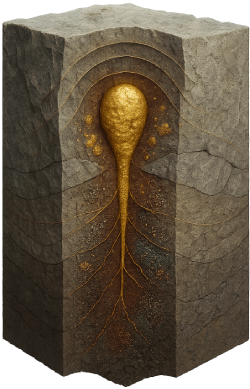
The occurrence of mineralization is seldom such a uniformity. Rather, there would be all the zoning, layering, and variations regarding the metal content as dictated by different factors such as temperature, pressure, chemistry, and structural setting of the mining area. Geologists are able to learn the processes of the deposit's formation and the areas of further exploration by simply noticing such patterns.
Areas where the gold deposits are found are usually vertically and horizontally zoned. The lower regions might be those with a higher concentration of copper and sulfides while the higher ones might be those rich in the gold and silver veins as they transition. Systems that are rich in silver also tend to show metal zonation with lead and zinc often being the deepest of the system.
Copper deposits particularly porphyry systems show concentric zoning. Chalcopyrite is the mineral that is most prominent in the core. The further you go the mineralogy changes to pyrite, and other types of alteration zones or even clay. These minerals reflect the changes in the temperature and chemistry that come along as the fluid moves from the intrusion.
Alteration Halos
Alteration halos form when hydrothermal fluids change the mineralogy of surrounding rocks. These halos act as a footprint, revealing how far fluids traveled from the source. Geologists map alteration minerals such as sericite, chlorite or carbonate to identify the geometry of the system.
In gold and silver systems, silica rich halos often mark the pathways of fluids. The presence of quartz veins, stockworks and brecciated zones frequently indicates areas where fluid flow was intense. Mapping these features helps geologists predict where higher grade zones might be located.
Why Some Terrains Become Metal Rich
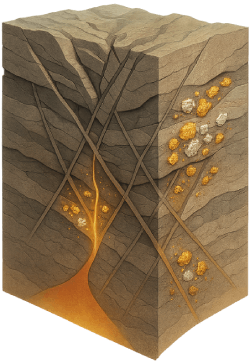
The Earth's metals such as gold, silver and copper are not distributed randomly. The right geological processes met the right terrains over a very long time which is why some areas have more metal deposits compared to others. Knowing what makes a terrain metal rich gives a good indication of the regions that exploration companies pick to work on and also explains why mining districts are often found in clusters.
Tectonic activity is one of the main factors. The collisions, separations, and sliding past each other of tectonic plates give rise to the heat, pressure, and structural complexity needed for mineralization. Faults, fractures, and shear zones are developed in these regions and they serve as pipelines for hydrothermal fluids. The presence of structural preparation is necessary for the mineral-rich fluids to move or accumulate effectively.
Another major factor is magmatism. A long history of volcanic or intrusive activity in an area means that there will be heat available to drive hydrothermal circulation. Fluid bearing with metals comes from magmatic intrusions and at the same time rocks are altered around them, often creating the conditions that lead to the deposits of gold, silver, or copper. Repeated magmatic events have been at the heart of the world's most productive mining belts like the Andes and the Yukon.
The Role of Geological Time
Metal rich terrains are not created overnight. They develop through multiple overlapping events that may span hundreds of millions of years. For example, a region may first experience volcanic activity that introduces metals into the crust. Millions of years later, tectonic forces may create new faults and fractures. Much later, a new intrusive body may send fresh hydrothermal fluids through those same structures, enriching them further.
This layering of events explains why certain belts contain clusters of deposits with different ages but similar structural orientations. The Abitibi Belt in Canada is a classic example. Its long tectonic history produced a structural framework that was repeatedly reactivated, allowing multiple generations of gold mineralization.
Case Examples of Metal Rich Terrains
Although this guide does not reference specific projects, it is helpful to understand why well known regions like the Yukon, British Columbia’s Golden Triangle, Nevada or the Andes are so mineral rich. These terrains share common geological attributes.
Yukon and Northern Terranes
The Yukon’s geology includes deep crustal faults, repeated tectonic collisions and a long history of intrusive activity. These processes created structural corridors that allowed gold bearing fluids to circulate extensively. The region also hosts large intrusive complexes associated with copper and gold porphyry systems. This combination of heat, structure and chemistry makes the Yukon one of the world’s most prospective gold and copper provinces.
Volcanic Arcs and Subduction Zones
Subduction zones, where one tectonic plate sinks beneath another, are major metal factories. They generate magmas enriched in metals and drive powerful hydrothermal systems. The Andes are a perfect example, stretching thousands of kilometers and hosting vast copper and gold deposits. The long lived magmatic activity along this margin has produced some of the world's largest porphyry systems.
Why Understanding Geology Matters
Knowing how metals form allows geologists to predict where new deposits might be found. Exploration is not guesswork. It is guided by patterns, structures, chemistry and the understanding of ancient geological events. When geologists identify the right combination of rock types, structures and alteration, they can target areas with strong potential, as explained on Gold & Minerals Canada.
This knowledge also benefits investors, students and anyone interested in the natural resources sector. By understanding the geological foundations of deposits, readers can better grasp why exploration companies focus on specific terrains, why metal districts form in clusters and how long term geological processes shape today’s mining opportunities.
Quick Links
🇨🇦 Newfoundland and Labrador just became one of the hottest mining jurisdictions in Canada.
— Juniorstocks.com (@Junior_Stocks) November 24, 2025
Record exploration. High-grade discoveries. Valentine Lake’s first pour.
New Found Gold ignited the spark and now the whole province is booming.
The Rock is officially gold country… pic.twitter.com/beJkB2ZNw0
With the kind help from