Understanding Feasibility Studies
Feasibility studies are comprehensive evaluations that determine whether a mineral project can be built and operated successfully. They include detailed engineering, environmental analysis, cost estimates and economic modelling. Feasibility studies occur in stages, gradually increasing in detail as confidence grows.
Preliminary Economic Assessment
A preliminary economic assessment is the very first economic study that is conducted. The aim of this assessment is to give a rough idea of the deposit's possible economic viability. The assumptions are very basic, and the engineering work is very limited at this initial stage. The intent of a preliminary assessment is to determine whether the investment should be continued or not.
It considers the mine layouts that could be, treatment routes that could be, capital expenditure that could be, operating costs that could be, and sales that could be. Though they are preliminary, companies and stakeholders still get an idea if the project has a chance of being economically viable through such assessments.
Pre-Feasibility Study
A pre-feasibility study includes more accurate engineering data and refined cost estimates. It examines mining methods, plant design, infrastructure needs, environmental considerations and financial projections. This stage identifies potential challenges and confirms whether the project should advance to full feasibility.
Pre-feasibility studies often include additional drilling to improve resource confidence. Better geological data reduces uncertainty and strengthens the accuracy of economic models.
Feasibility Study
The most exhaustive and trustworthy economic appraisal is the feasibility study. It encompasses engineering methods at their conclusion, mine designs that are fully matured, totally detailed financial estimates, and monetary forecasts grounded on very sure data. Feasibility studies are the only economic assessments that banks and investors consider, as they draw a clear map of the project’s technology and economy.
An affirmative feasibility study reflects the scenario where the project is technically possible, has the potential to bring in profits and can be developed, provided that the market and financing conditions are right.
Understanding Costs in Mining
Mining projects face two major categories of costs: capital costs and operating costs. Understanding these costs is essential because they determine whether a project generates profit throughout its life.
Capital Costs
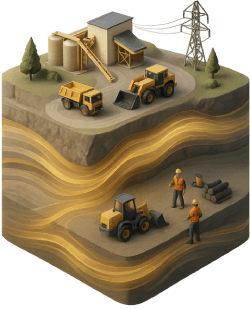
Capital costs, or capex, include the expenses required to build the mine. This includes infrastructure, processing plants, equipment, roads, power supply and permitting. Capex is typically one of the largest financial hurdles in mining. A project with high capex must demonstrate strong long term revenue to justify development.
Operating Costs
Operating costs, also known as opex, are the necessary expenses, which if not incurred, the mine would not be able to operate and produce people’s demand. Opex consists of labor, power, maintenance, explosives, processing agents, and general administration among other expenses. Opex is very important as it reveals the daily profit or loss situation of the project.
Mines with lower opex have more power to survive the periods when metal prices are falling. On the other hand, high opex projects require higher commodity prices to be able to make a profit. Consequently, the knowledge of opex assists companies and investors in understanding how sensitive a project is to the ups and downs of the market.
The Role of Metal Pricing
Metal prices directly influence project economics. Gold, silver, copper and other metals follow global supply and demand trends, making prices dynamic and often unpredictable. Long term economic evaluations use price assumptions based on historical data, market analysis and industry forecasts.
Price Volatility
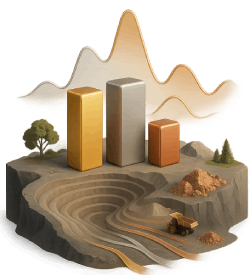
Volatility remains a major difficulty in the mining sector. The metal market is unstable and its prices can be swayed by various factors including wars, economic ups and downs, technological innovations, and the shift in global production. A mine that renders good profits at high prices might turn to a mere survivor when the prices are low.
This is the reason feasibility studies very frequently apply to sensitivity analyses. The impacts of increasing or decreasing metals prices, costs and project conditions on the profits are shown by these models. Sensitivity analysis is a tool that informs the decision makers of the risk and measures the robustness of the projects under given conditions.
Revenue Models
Mining revenue is calculated by multiplying the grade and tonnage of ore by the metal price, minus processing and recovery losses. Higher grades generally improve revenue potential, but grade alone does not define a project’s value. Scale, continuity, metallurgy and production rates also determine long term revenues.
Projects with strong, consistent grades and efficient processing often deliver more reliable financial performance.
Evaluating Risk Factors
Mining carries multiple risks that affect the economic success of a project. Economic assessments identify and quantify these risks so companies can design strategies to reduce or manage them.
Geological Risk
Geological risk refers to uncertainty about the size, grade and continuity of the mineral deposit. Additional drilling and stronger geological models reduce this risk. Projects with well defined resources offer greater confidence in future production.
Technical and Engineering Risk
Technical risk involves uncertainties about mining methods, infrastructure reliability and processing performance. For example, if ore is difficult to process, recovery rates may be lower than expected, affecting revenue. Engineering studies, pilot tests and metallurgical analyses reduce technical risk.
Environmental and Regulatory Risk
Mining must comply with strict environmental and regulatory standards. Delays in permitting, changes in regulations or challenges related to environmental impact can affect timelines and costs. Strong environmental planning and early engagement with regulators help reduce these risks.
Market and Economic Risk
Market risk includes fluctuations in metal prices, inflation, currency exchange rates and global economic conditions. Because these elements are outside company control, economic models must account for uncertainty and consider a range of scenarios.
Projects that remain profitable across multiple price environments are considered more robust.
Long-Term Economic Contributions
Mining projects generate value far beyond the direct extraction of gold and minerals. When developed responsibly and sustainably, they contribute to regional, provincial and national economies through employment, infrastructure, tax revenue and long term development opportunities. Understanding these broader benefits helps explain why mineral projects must be evaluated not only on financial profit but also on their overall economic impact.
Employment and Local Development
Mining activities generate employment at various stages: study of the site, building of the site, running the site, and eventually closing the site. These jobs are frequently located in or near isolated or rural areas, thus providing a long-term source of income as well as upgrading the skills of the local labor force. Mining in Canada, for example, is a major factor in the support of Indigenous employment, and in addition, the training programs and partnerships established contribute positively to community well-being.
As already mentioned, besides the companies’ direct employees, mining activities contribute to the creation of indirect jobs in the fields of transportation, environmental services, engineering, equipment supply, and catering, to mention just a few of the support industries. The so-called multiplier effect is then responsible for the creation of regional economies that are more diversified.
Infrastructure Investments
Numerous mining operations call for the establishment of roads, airstrips, and the installation of powerlines and communication networks. To a large extent, the installation of these infrastructures is done not only to aid the mining operations but also to the surrounding communities in terms of benefits. The infrastructural development brought about by the mining operations can also be used by the local businesses, the healthcare sector, and the educational sector besides providing the region with long-term development.
Sometimes, mining companies join forces with the governments and the Indigenous nations to not only develop the infrastructure required by the mining operations but also create an infrastructure that will last long after the closure of the mine and continue to serve the region.
Fiscal Contributions to Governments
Mining contributes significantly to public finances through taxes, royalties, land use fees and corporate income taxes. These revenues support essential public services including education, healthcare, transportation and community programs. In mineral rich provinces and territories, mining is a major contributor to the regional budget.
Royalties and Taxes
Royalties ensure that a portion of the value generated from natural resources is returned to the jurisdiction where they occur. Tax structures vary by province or territory, but they are designed to balance investor confidence with fair public benefit. When managed effectively, this system supports both economic opportunity and long term sustainability.
Sustainable Value Beyond the Mine Life
Mining projects eventually reach the end of their operational life, but their economic contributions continue. Successful closure and reclamation support future land uses such as conservation, recreation, forestry or traditional cultural activities. Post closure landscapes can be integrated back into the local economy in meaningful ways.
Legacy Benefits
A well managed mining project leaves behind lasting benefits. Skills training strengthens the regional workforce, infrastructure remains in use, and partnerships between industry, governments and Indigenous communities continue to shape future development. Economic diversification projects launched during the mining phase can support long term prosperity.
Understanding Value Creation in Mining
Mining economics set up a guide that through which the evaluation of a mining project concerning the value it can offer in the long run is possible. The feasibility studies, cost analysis, metal price forecasts and risk assessments are the major factors influencing the decision taken. In so far as responsible mining practices and patience in planning are concerned, mineral projects can be economically and socially contributing over the years.
A Balanced Perspective
The goal of mining economics is not simply to determine profit but to understand the full spectrum of value that mineral projects bring to society. By analyzing costs, risks and long term benefits, stakeholders gain a clear view of how responsible mining supports communities, strengthens economies and contributes to broader sustainability goals.
Quick Links
🇨🇦 Newfoundland and Labrador just became one of the hottest mining jurisdictions in Canada.
— Juniorstocks.com (@Junior_Stocks) November 24, 2025
Record exploration. High-grade discoveries. Valentine Lake’s first pour.
New Found Gold ignited the spark and now the whole province is booming.
The Rock is officially gold country… pic.twitter.com/beJkB2ZNw0
With the kind help from