The Foundations of Environmental Stewardship
Environmental stewardship signifies the ability to use the planet's natural assets wisely and sustainably, making sure that no phases of mining, be it prior, during, or after, cause any harm or even destruction to nature. In Canada, environmental stewardship commences a very long time before the actual physical mining starts. To begin with, mining companies should carry out geological, ecological and environmental studies without missing a condition record of the area. Among the characteristics to be recorded in these baseline studies are the water, soil, biodiversity, wildlife, and even the cultural or religious sites.
Getting such information at the very start will not only be a basis to back up the company's decisions environmentally but also be an input to their programs and plans which are the least harmful to nature. Moreover, it allows the regulators, Indigenous peoples, and the general public to have a better and easier understanding of the landscape interactions of the given project.
Minimizing Disturbance
Avoiding unnecessary disturbance is the first principle of stewardship. Exploration activities are aimed at taking advantage of light and low impact methods wherever it is feasible. Remote sensing, aerial surveys, and hand sampling all contribute to lessening the early stage work's footprint. When drilling is necessary, the companies must adhere to very precise rules regarding water usage, handling of fuel, and waste management.
Mine development, disturbance reduction will imply engineering decisions related to compact site layout, progressive reclamation, dust control and careful water management, among others. These methods will not only help to keep the ecosystem in balance but will also minimize the impact in the long run.
Water Protection
Environmental stewardship mainly deals with water. The mining regulations in Canada require very detailed plans for water management, treatment, and monitoring. It is a requirement in these regulations that the companies do not harm anyone, protect the aquatic animals' habitats and the water released is of the best quality according to the strictest standards.
Water protection does not stop when mining ends. The long-term monitoring programs that observe the quality of water, the flow patterns, and the ecological recovery are the ones that ensure the safety and the productivity of the site for the next generations.
Community Consultation and Social Responsibility
One cannot expect responsible resource extraction to happen when there is no good and meaningful communication with the concerned communities. In the case of Canada, it will be the nearby inhabitants and the Indigenous groups whose rights, territories, and customs are to be acknowledged that are the communities involved. Consultation is not an empty procedure but rather a continuous conversation that creates trust, comprehension, and joint decision making.
Engaging Indigenous Communities
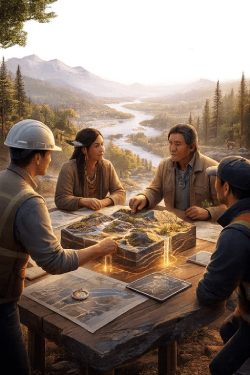
The law mandates that Indigenous Peoples be consulted and it is also a matter of conscience. The fact that the traditional lands of the Indians are located in Canada, where the country's mineral-rich areas are mostly situated, is the basis for the government cooperation with the Indigenous. The process of meaningful consultation includes the steps which have been mentioned above, i.e. early communication, transparent sharing of information, and recognition of indigenous peoples’ knowledge.
The indigenous communities are expected to contribute a great deal of knowledge regarding local animals, their mating periods, rivers and lakes and also places of their culture. Thus, their views will be taken into consideration through the good project design. Moreover, the many partnerships that exist will be associated with the opportunities of training, employment, business ascetism and even co-managing the monitoring programs.
Building Long Term Community Relationships
Effective consultation extends beyond early meetings. It requires ongoing involvement throughout exploration, development, operation and closure. Communities expect clear communication, accessible information and opportunities to influence project decisions.
Companies that foster strong community relationships often experience fewer conflicts and greater long term success. Responsible development acknowledges that social acceptance is essential: without community trust, a project cannot move forward sustainably.
Reclamation Planning from the Start
Land reclamation is the process of restoring the landscape to its original condition or even improving it after the mining activities are done. In the case of responsible resource development, reclamation is not the final step but rather a process that is considered from the very start. The Canadian environmental laws require mining companies to submit a detailed plan indicating how the land will be eventually transformed into a stable, natural, or productive state. This may involve reshaping the land using earthwork, planting native shrubs and trees, conserving the water catchment area, and overall enabling the long-lasting connection of the ecosystems.
Through excellent planning, the companies are able to examine the various closure scenarios and pick the best ones that will meet both the environmental recovery and the community expectation. Furthermore, reclamation acts as a monitoring system since mining companies have to set aside money beforehand to pay for the closure costs.
Progressive Reclamation
One of the strongest best practices in Canada is progressive reclamation. Instead of waiting until the end of the mine’s life, companies restore areas as soon as they are no longer needed for operations. This approach reduces the total disturbed footprint, speeds up ecosystem recovery and provides visible proof of responsible management.
Restoring Ecosystems
Successful reclamation restores natural processes, not just surface appearance. This means reintroducing plant species native to the region, supporting wildlife habitat and rebuilding soil health. In some cases, reclaimed land can be used for purposes such as forestry, agriculture, conservation or cultural activities.
Regulatory Expectations in Canada
Canada is known for having some of the world’s most robust mining regulations. These regulations are designed to ensure that resource development proceeds in a responsible, safe and environmentally sound manner. The rules cover every stage of a project, from early minerals and gold exploration through to closure and post closure monitoring.
Environmental Assessment Requirements
Major mining projects undergo federal or provincial environmental assessments. These assessments evaluate potential impacts on water, wildlife, air quality, communities and cultural sites. They also require companies to propose measures that avoid, minimize and offset environmental effects.
Assessment processes involve public participation, Indigenous consultation and scientific review. This helps ensure that decisions are transparent and based on evidence.
Long Term Sustainability
Sustainability in mining means more than reducing impacts. It means ensuring that resource development contributes positively to society, respects future generations and aligns with global environmental goals. In Canada, sustainability drives innovation in energy use, waste reduction and environmental protection.
Reducing Carbon Footprint
Mining companies are implementing more and more clean energy sources like hydroelectricity, wind power, and the use of electric machines. The reduction of greenhouse gas emissions has turned into an absolute necessity, particularly in isolated areas where diesel power used to be the main source of energy.
On the other hand, technology is playing a role. The use of automation, energy-saving machines, and real-time monitoring systems makes it possible for mines to cut their energy usage and boost their operational effectiveness.
Waste Management and Tailings Safety
Responsible mining also requires careful management of waste materials, especially tailings. Tailings are the finely ground rock and processing byproducts that remain after valuable minerals are extracted. In Canada, tailings management is highly regulated because the safety and stability of tailings facilities are essential for protecting the environment and nearby communities.
Designing Safe Tailings Facilities
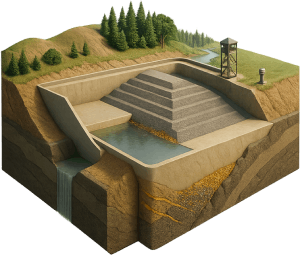
The highest standards of engineering are expected to be applied to modern tailings storage facilities. Typically, the design of such facilities comprises several components: building of dams, installation of artificial liners, setting up of surveillance systems and development of disaster management plans. On the other hand, during their design, the experts will have to consider the likelihood of earthquakes, climate conditions and the very long term stability of these structures.
It is common practice in Canada for the regulatory bodies to recommend taking independent reviewers along, carrying out risk assessments, and performing regular inspections. All this is to ensure that such catastrophes do not ever happen again and that the tailings, so to speak, are kept in the inaccessible part of the world where the nature cannot even reach. Taking into account the water content reduction and the safety factor of the processes, a number of mining companies are already investing in either filtered or dry stack tailings methods as a major part of their strategy to stay ahead in this matter.
Transparency and Reporting
Responsible companies publicly disclose information about their tailings facilities, including design reports, monitoring results and community communication plans. Transparency builds trust and allows communities and regulators to stay informed about the ongoing safety of these structures.
Innovation and Future Focus
The mining industry is constantly evolving to meet higher environmental and social standards. New technologies and strategies are helping companies reduce their footprint while maximizing efficiency. Responsible resource development encourages innovative solutions that align with climate goals, community expectations and global sustainability frameworks.
Technological Improvements
Advanced sensors and data analytics now allow real time environmental monitoring. Drones can scan landscapes and tailings facilities, detecting changes early. Artificial intelligence helps optimize water use, energy consumption and mine planning. These tools support safer, more sustainable operations.
There is also growing interest in renewable powered mines, electric haul trucks and low impact drilling technologies. By adopting these innovations, the sector reduces emissions while strengthening operational reliability.
Circular Economy Principles
The development of resources responsibly is also considering the circular economy principles. The companies are investigating the methods through which they can cut down on the waste, reuse the materials, and find new applications for the mining byproducts. New investments come along with the new technologies, which can recover gold and minerals from some of the 'waste' and create more value that was never thought to exist.
The reprocessing can prove to be an environmental friendly practice that minimizes the risks and the environmental impact by the reduction of waste material storage. This approach is in coincidence with the worldwide movements aimed to set up resource cycles that are both efficient and sustainable.
The Social License to Operate
One of the most important concepts in modern mining is the social license to operate. This refers to the ongoing acceptance and support of a project by local communities and Indigenous groups. Without this trust, projects face significant delays, opposition or even cancellation.
Building Trust Over Time
Obtaining a social license is not a one time event. It requires consistent, transparent communication, respect for cultural values and genuine collaboration. Many projects now involve community advisory boards, independent environmental monitors and shared decision making models.
Quick Links
🇨🇦 Newfoundland and Labrador just became one of the hottest mining jurisdictions in Canada.
— Juniorstocks.com (@Junior_Stocks) November 24, 2025
Record exploration. High-grade discoveries. Valentine Lake’s first pour.
New Found Gold ignited the spark and now the whole province is booming.
The Rock is officially gold country… pic.twitter.com/beJkB2ZNw0
With the kind help from